



Subject Introduction and Features
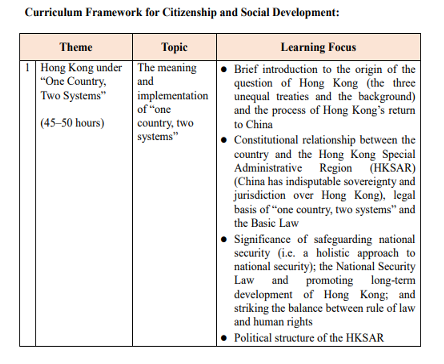
Citizenship and Social Development adheres to the rationale of the senior secondary Liberal Studies curriculum. The curriculum emphasises helping senior secondary students understand the situations of Hong Kong, the country and the contemporary world, as well as their pluralistic and interdependent nature. Through the learning process, students can connect the knowledge learnt in various subjects at the junior and senior secondary levels, and understand, study and explore different topics from 5 multiple perspectives, so as to construct more knowledge relevant to various themes and build up a more solid knowledge base. Furthermore, students can understand the complexities, major considerations and priorities involved in the topics, decision-making process and different solutions to problems, in order to help students:
(a) acquire a broad knowledge base, and understand contemporary issues that may affect their daily life at personal, community, national and global levels;
(b) become informed and responsible citizens with a sense of national identity and global perspective;
(c) respect pluralism of cultures and views, and become critical, rational, reflective and independent thinkers;
(d) acquire skills necessary to life-long learning, and be confident in facing future challenges.
Citizenship and Social Development Curriculum and Assessment Guide
(Secondary 4 - 6)
Course Objectives
The aims of Citizenship and Social Development are to help students:
(a) enhance understanding of society, the country, the human world, the physical environment and related knowledge;
(b) develop multiple perspectives on contemporary mature topics in different contexts (e.g. cultural, social, economic, political and technological contexts);
(c) become independent thinkers; be able to adapt to the ever-changing personal, social, national and global circumstances and construct knowledge; understand the complexities of the topics, and the challenges and processes involved in decision-making for making law-abiding, rational and affective analysis, and learning how to handle conflicting values;
(d) inherit Chinese culture and heritage in a pluralistic society, deepen understanding and sense of identity of individuals with Chinese nationality and Chinese citizenship, and at the same time appreciate, respect and embrace diversity in cultures and views;
(e) develop skills relevant to life-long learning and strengthen their ability to integrate and apply knowledge and skills, including critical thinking skills, creativity, problem solving skills, communication skills, collaboration skills, data management skills, self-management skills, self-learning skills, and information technology skills;
(f) develop positive values and attitudes towards life, so that they can become informed and responsible citizens of society, the country and the world.
Course Structure
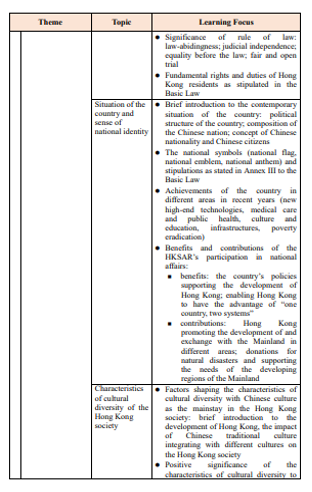
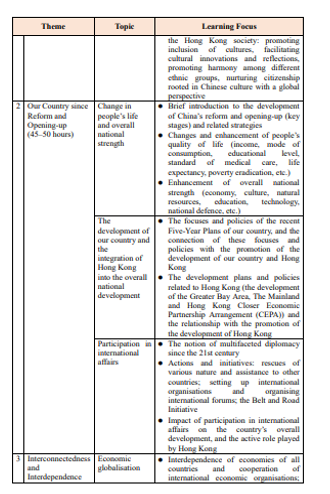
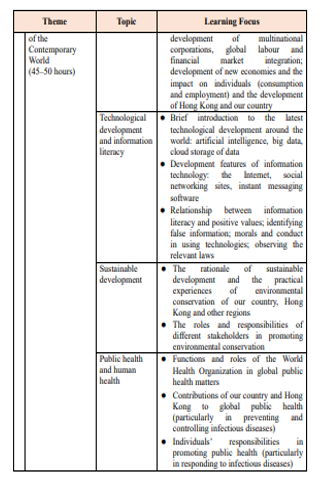
Career Path for Students
With reference to the Secondary Education Curriculum Guide and other related curriculum documents, the design principles of this curriculum are as follows:
(a) The Citizenship and Social Development curriculum is built on the knowledge, skills, values and attitudes, and learning experiences expected of students in the basic education. Students’ learning in the eight Key Learning Areas (KLA) and their exposure to the five Essential Learning Experiences at the junior secondary level provide them with the necessary knowledge base and capacity for their learning in Citizenship and Social Development.
(b) Through studying topics based on different contexts, the curriculum emphasises integration and application of what have learnt, and broadening and deepening the knowledge base of every student by means of enquiry and reflection.
(c) The curriculum helps students understand the topics that are of concern to society, the country and the contemporary world through exposure to related knowledge as well as thinking and analysing from different perspectives. The curriculum also helps students transfer and apply the knowledge and skills gained to other topics, and continue to explore topics that interest them in an open-minded manner.
(d) The curriculum emphasises adopting different learning and teaching strategies, taking into account students’ abilities and learning needs, to cater for learner diversity, facilitate effective learning and unleash students’ potential.
(e) The knowledge, skills, positive values and attitudes developed in Citizenship and Social Development help prepare students for different pathways, including further studies, training and employment.
Discipline members
YEUNG MK, LAI MF, HUI HF, LEE FT, ZHU MH
Useful links/resources
1. 香港教育局公民及社會發展科網頁https://cs.edb.edcity.hk/tc/index_cs.php
2. 香港考試及評核局網頁http://www.hkeaa.edu.hk/en/hkdse/hkdse_subj.html?A1&1&3
3. 香港教育局課程文件 (個人、社會及人文教育) 網頁https://www.edb.gov.hk/tc/curriculum-development/kla/pshe/curriculum-documents.html
Event Highlights
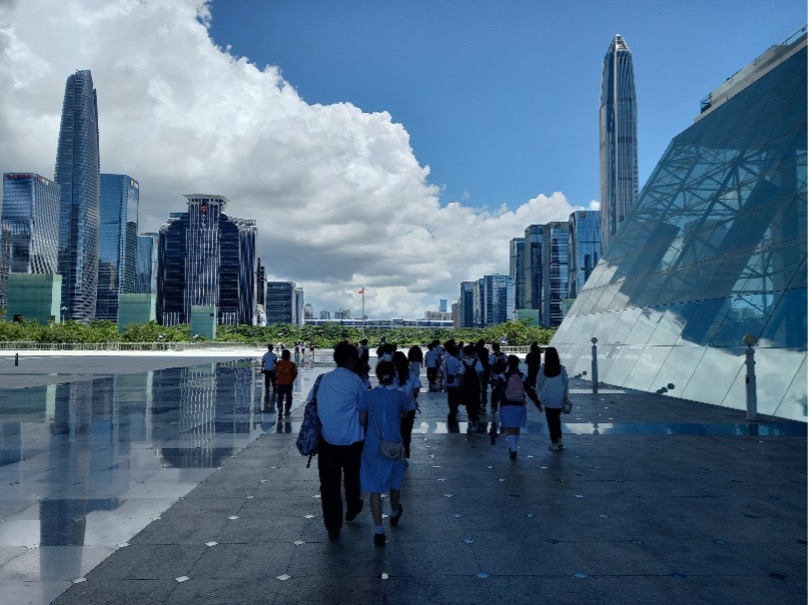
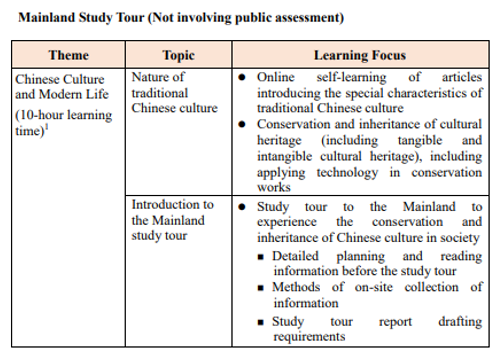
Mainland Study Tour (Shenzhen Industrial Museum)
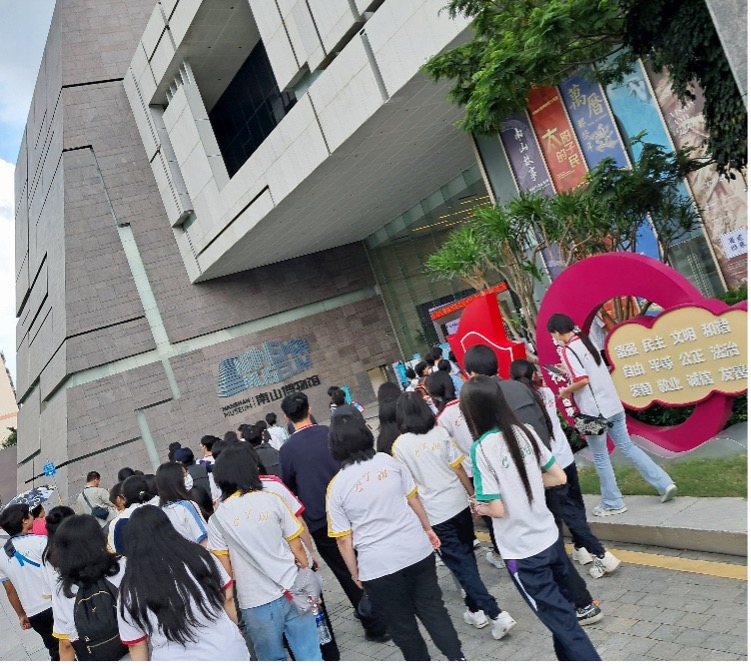
Mainland Study Tour (Nanshan Museum)
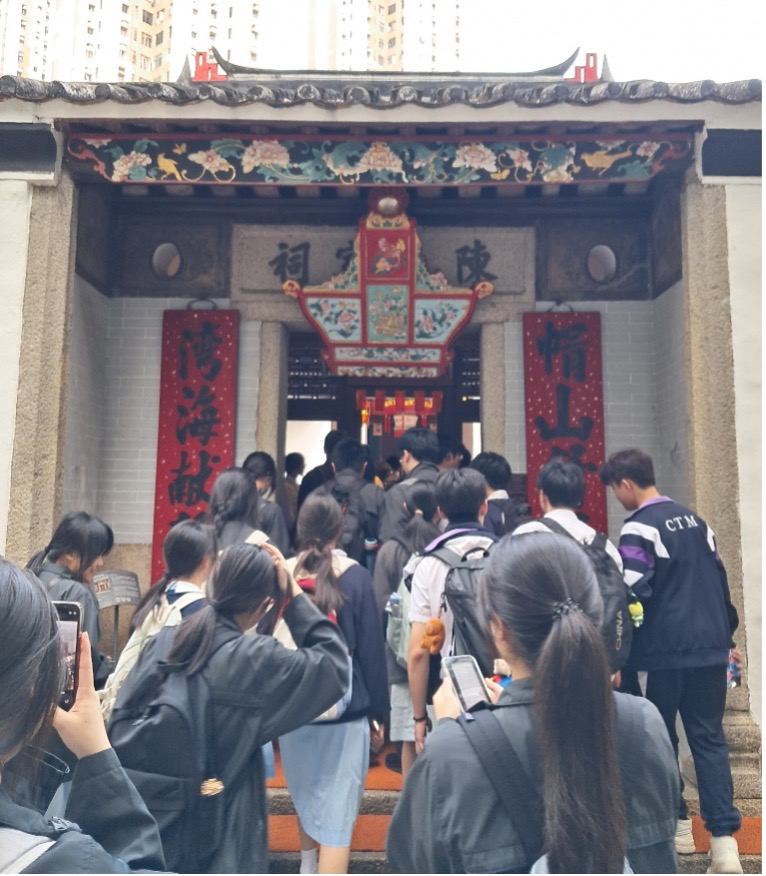
Local Field Study (Intangible Cultural Heritage Centre @Sam Tung Uk Museum)

 Instagram
 Y
Y Facebook